
Repair, Rebuild Or Replace A Wheel Loader? Build The Decision Around The Work
Compare credible repair scope, production coverage and future ownership costs before deciding the next chapter for an aggregate wheel loader.
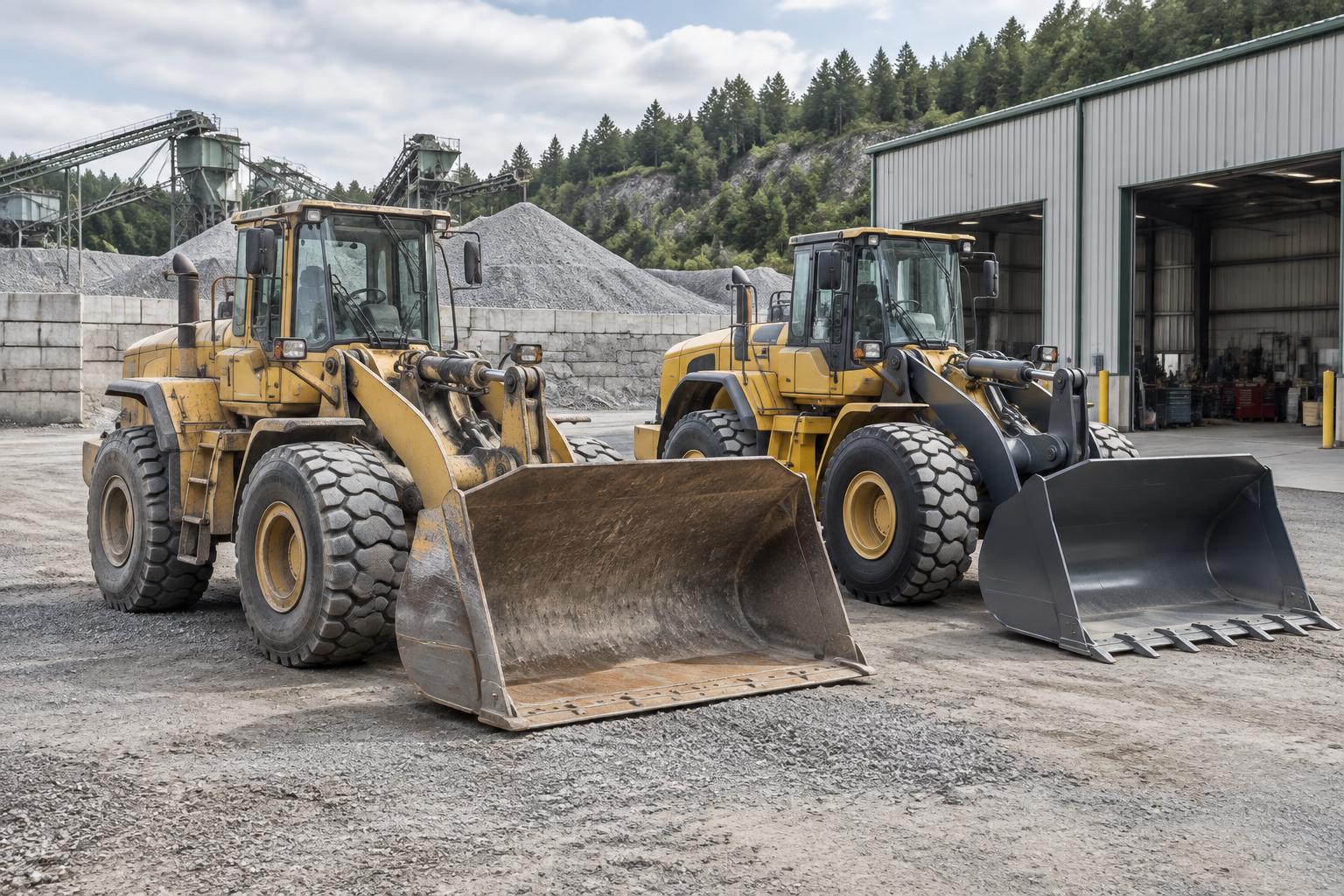
A major wheel-loader repair quote can force a quick capital discussion. In an aggregate operation, however, the invoice is only one part of the decision. The loader may feed a plant, serve customers at a stockpile or support a critical production sequence. What replaces that capacity while the machine is unavailable matters as much as the price of the intervention.
There is no universal hour-meter threshold that decides whether to repair, rebuild or replace. Build the comparison around the actual unit, its condition, the work ahead and documented alternatives. Keep uncertain estimates visible rather than turning them into a precise-looking recommendation.
Start with the job the loader must do
Define the loading application, material, configuration, expected work period and acceptable availability. Confirm whether the existing machine remains suitable or whether production requirements have changed. A repair can restore condition without correcting a mismatch between the unit and its assignment.
Identify the consequence of an interruption. Can another owned loader cover the task? Would moving it disrupt a different site? Is a rental genuinely available with the required configuration? Use real availability and supplier quotations, not an assumed backup machine.
Ask for a scope, not just a total
A useful repair proposal identifies the diagnosed issue, included work, exclusions, inspection steps and findings that could change the quote. Request a realistic timeline with dependencies such as parts supply and specialist labor. Clarify what remains original and what warranty, if any, covers the completed work.
For a rebuild, ask what the term means in that particular proposal. Different scopes can leave very different components untouched. Compare the machine’s other known condition issues rather than treating the rebuilt assembly as a renewal of the entire loader.
Compare forward-looking costs over the same period
Choose a common planning horizon for all options. Consider intervention cost, expected maintenance and repairs, financing or capital cost, transport, temporary coverage and estimated residual value. Include fuel, training and commissioning differences only where there is a defensible basis.
Caterpillar’s repair, rebuild or replace guidance cautions against considering repair-versus-replacement cost alone and raises factors including warranty, depreciation, fuel and disposal. Have financial and tax assumptions reviewed by the appropriate advisers. A blog formula cannot establish the right accounting treatment.
Do not let past spending make the next decision
Historical repairs help explain condition and recurring problems, but money already spent is not recovered by approving another repair. Separate that history from the future costs and risks of each option. Ask whether the proposed intervention addresses the causes behind repeat work.
Check the quality of the records. Costs coded to the wrong asset, missing outside invoices or incomplete downtime records can distort the comparison. Reconcile the important gaps before using them to justify a capital purchase.
Show uncertainty with scenarios
Compare a base case with credible downside conditions: additional findings during repair, delayed parts, a longer temporary rental or a lower disposal value. Do not imply every cost difference is known. Identify which assumption would change the recommendation and how it can be checked.
Assess availability risk separately from financial totals. The lowest estimated cost may not provide acceptable coverage for a committed production period. Equally, an expensive replacement is not automatically justified by a vague concern about reliability.
Write a decision the team can revisit
Record the selected option, supporting quotations, condition evidence, planning horizon, assumptions and approval. Set a review point after the intervention or deployment to compare actual outcomes with the estimate. That feedback strengthens the next decision across the fleet.
The dealer locator can help identify territory coverage when seeking service or replacement discussions; confirm capability and commercial terms directly. Use the maintenance library alongside machine-specific manuals, and bring your asset-history requirements to a goAardvark demo.
More from the blog
Know where your fleet stands before the day slips.
Book a demo to see how goAardvark fits your heavy-civil operation.